AI for Cooperatives
Why a cooperative can do something with artificial intelligence that an individual cannot: own the tool rather than rent it.
Owning the tool together
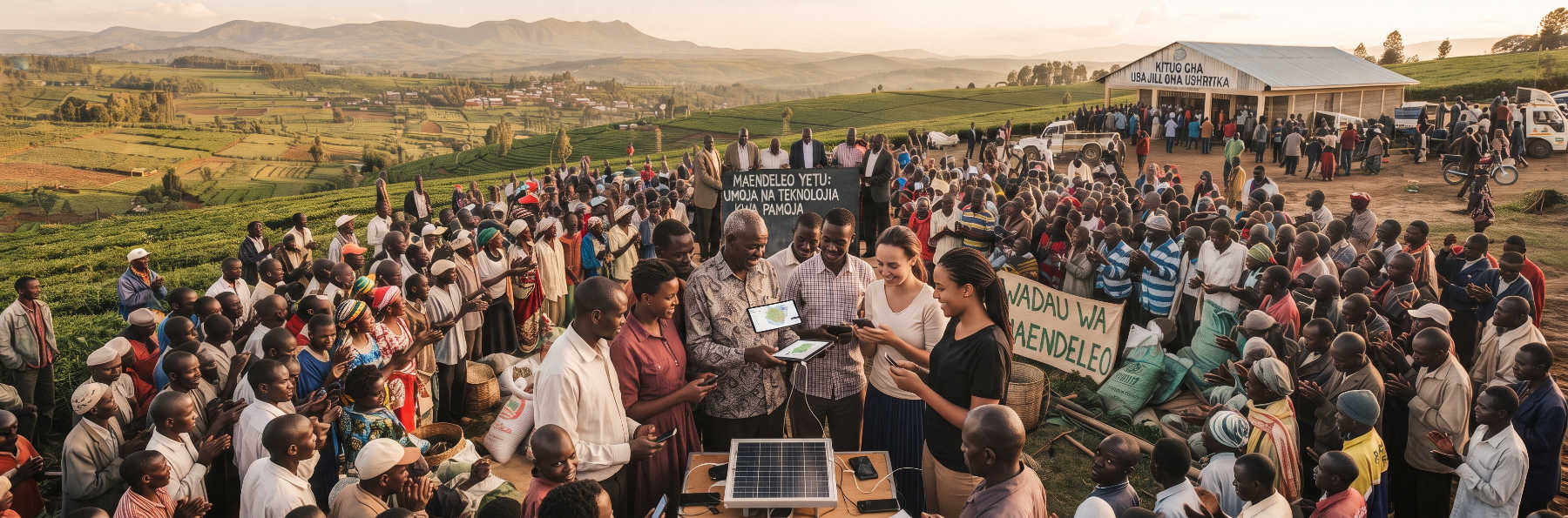
Every other page in this track is about one person using AI. This one is different. Here a group owns and uses an AI tool together — the way a cooperative already owns a mill, a tractor or a cold store between its members. That is the whole cooperative idea: something too expensive or too complex for one person becomes usable for everyone when they pool together.
A single smallholder can’t afford an analyst, a bookkeeper, or a marketing specialist. A cooperative of 200 members can — if they pool. Instead of everyone struggling alone, the cooperative sets up one good system once, and every member benefits. It’s “by the members, for the members.”
What a cooperative can do with it
Shared bookkeeping & transparency
AI keeps the cooperative’s books in order, produces clear reports for the members’ meeting, and shows where the money goes. That builds trust — the sore point of many cooperatives.
Working out fair distribution
When earnings are split by a distribution key (who delivered how much), AI works it out transparently and traceably. No disputes, no favouritism.
Market prices & stronger bargaining
AI watches prices and demand so the cooperative knows when and where to sell best — instead of to the first middleman. Bargaining together, you bargain stronger.
Applications, grants & formalities
Grant applications, registrations, official letters, reports to the authorities (e.g. SASRA) — AI helps produce them correctly and quickly. For many small cooperatives, a real hurdle.
Member communication
Announcements, reminders (contributions, meetings), answers to common questions — automatic, multilingual (Kiswahili/English/local languages), by SMS or WhatsApp to all members.
Knowledge & training for every member
The cooperative provides an AI tool that every member can use as a patient teacher — for better farming methods, bookkeeping, business knowledge. Education that would otherwise be unaffordable becomes shared.
Joint marketing & one voice outward
A single farmer has no brand. The cooperative does. AI helps create shared product descriptions, social media and a small website — one strong shared presence instead of many weak individual ones.
Quality assurance & standards
AI helps document consistent quality (important for export or larger buyers) — proof a single smallholder could never provide.
The honest frame
The AI makes no decisions — the members do. AI provides numbers, suggestions and overviews. Decisions about money, distribution and direction are made by the members’ meeting, democratically. The tool strengthens self-governance; it does not replace it.
Data sovereignty: the cooperative’s data belongs to the cooperative. This is where self-hostable models (see the AI Models page) fit — for sensitive member data.
And this is exactly what Shirikiana helps with
This isn’t a distant future. Helping cooperatives own and use tools like these — together, transparently, under member control — is exactly what Shirikiana and its partners are building: the community platform and the AI-supported portal. A cooperative doesn’t have to figure this out alone.
How this fits our training
This page belongs to our practical AI training, which runs through institutions that already teach and continues after the course ends. See the AI overview or how to take part.
Shirikiana —> to work with one another. The founding values of the cooperative movement, self-help, self-responsibility and solidarity, remain the most practical basis for collective enterprise. We join knowledge, applied action and ethical responsibility in member-owned, member-governed enterprise, guided by the International Cooperative Alliance’s principle of concern for community. We proceed incrementally, attribute every partner by name, and distinguish demonstrated capacity from stated intent.