AI Models
Which models people actually use, what each one is built for, and which of them you can run on your own hardware. We keep this page current as the field changes.
Defining Artificial Intelligence – And What It Is Not
Not every AI model is built for the same purpose, and the differences matter more than the marketing suggests. Some are general-purpose conversational engines, others are optimized for reasoning and code, others still are built to generate images, video or sound rather than text at all. Choosing the right tool starts with understanding what each one was actually designed to do — and, just as importantly, whether it runs on infrastructure you control or on someone else’s server on another continent. The models below represent the current landscape; the applications section that follows shows what you can actually build with them.
What You Can Build: Three Core Applications
Behind every one of these models sits the same underlying question: what are you actually trying to produce? Broadly, three application areas cover most of what a cooperative, small business, or individual will realistically use AI for. Each is explored in depth on its own page.
Chat & Conversational Assistants
The most familiar and accessible entry point: a text or voice interface for drafting, researching, translating, summarizing, and reasoning through problems in natural language. This is where most people start, and for many day-to-day tasks — correspondence, planning, learning — it remains the most direct path from question to useful answer.
Image & Video Generation
Text-to-image and text-to-video models turn a written description into visual content — product photography, marketing material, illustrations, or short video clips — without a camera, studio, or design software. For businesses and cooperatives with limited production budgets, this collapses a process that once required specialized equipment and skills into a prompt and a few minutes of generation time.
Music & Audio Generation
AI audio tools can compose original music, generate voiceovers, or produce sound design from a text description or a reference style, opening production capabilities — jingles, background scores, narration — that were previously out of reach without a studio or a composer on retainer.

A Curated Compendium of Leading AI Models
The following is a selection of the most architecturally significant and functionally diverse AI models available today. Each has been engineered with specific strengths, making them suitable for distinct professional and personal workflows.
ChatGPT · OpenAI
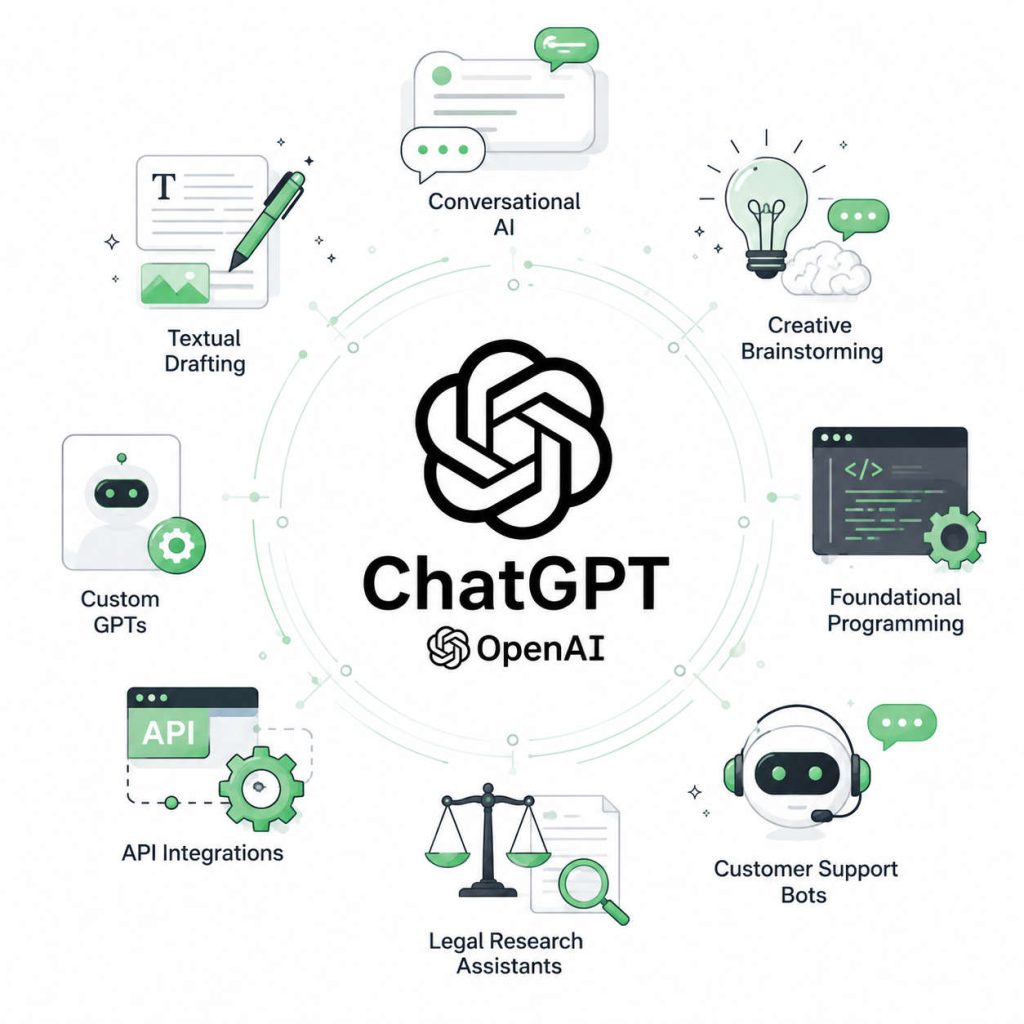
The undisputed pioneer of the modern generative AI revolution. Built upon the evolutionary GPT architecture, it excels in universal text generation, conversational fluidity, and broad-spectrum knowledge retrieval. Its versatility makes it the quintessential entry point for drafting correspondence, creative brainstorming, and fundamental coding tasks. Beyond the base model, its extensive ecosystem of Custom GPTs and API integrations allows users to tailor the system to highly specific, vertical professional workflows—from customer support bots to specialized legal research assistants. Ideal for: Textual Drafting · Creative Brainstorming · Foundational Programming · General Purpose Assistance
Gemini · Google DeepMind
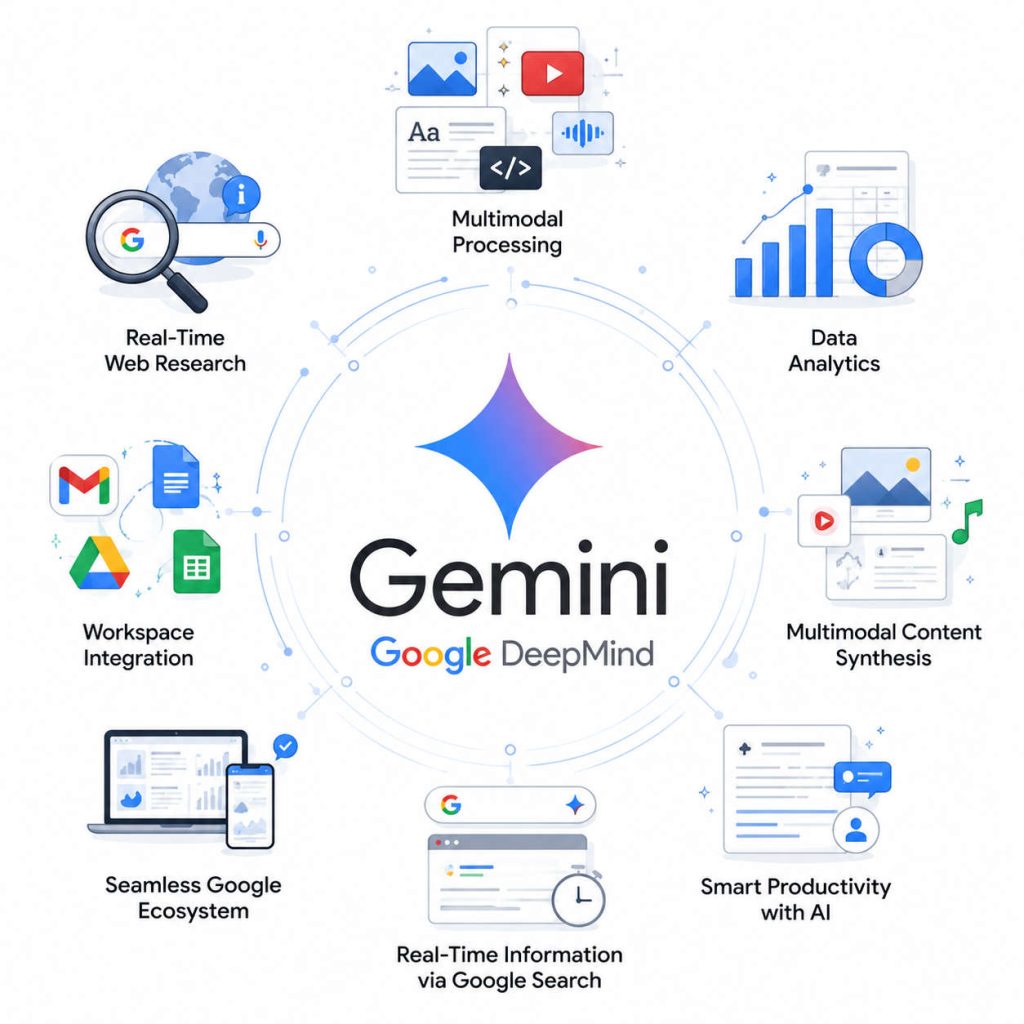
A natively multimodal model deeply entrenched within the Google ecosystem. Gemini’s architectural core strength lies in its simultaneous processing and synthesis of heterogeneous data types—text, audio, video, images, and code—without degrading performance. It is unparalleled for complex data analytics, real-time web-based research via Google Search, and multimodal content creation. Its seamless interoperability with Google Workspace (Docs, Sheets, Gmail) renders it exceptionally valuable for users whose operational infrastructure is already situated within the Google productivity environment. Ideal for: Data Analytics · Real-Time Web Research · Multimodal Content Synthesis · Workspace Integration
Claude · Anthropic
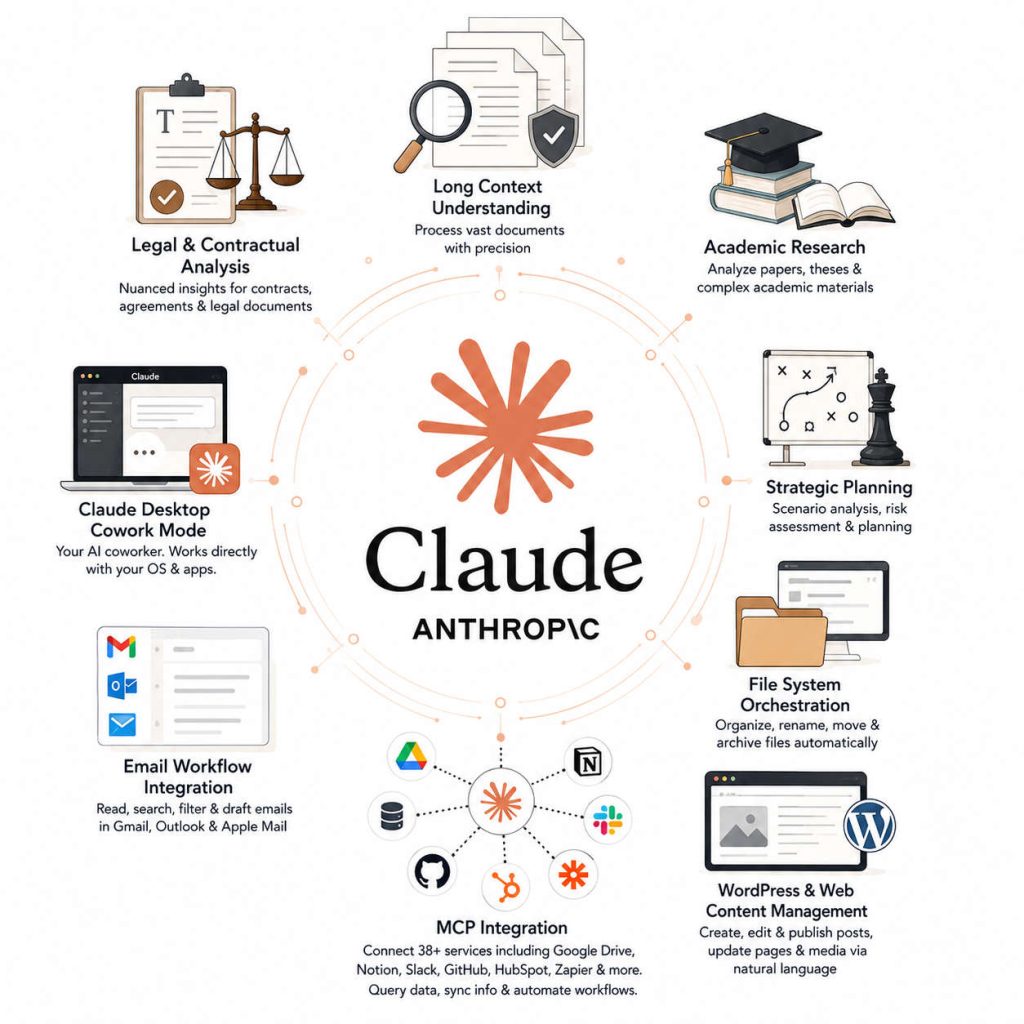
Engineered with a foundational emphasis on safety, constitutional alignment, and expansive context windows. Claude distinguishes itself in the processing of lengthy, complex documents—such as legal contracts, academic theses, and comprehensive research papers—delivering nuanced, ethically calibrated, and highly structured analytical outputs.
Extended Capabilities – The Claude Desktop Ecosystem:
Beyond the chat interface, the Claude Desktop application (featuring the advanced Cowork Mode, introduced in early 2026) transforms the model into a veritable digital co-worker capable of direct interaction with your operating system and software stack. Key capabilities include:
File System Orchestration: Instruct Claude to “organize my Downloads folder by project type” or “rename and archive all files from Q3 2025″—it executes complex file management operations autonomously.
Email Workflow Integration: Claude can interface with Gmail, Apple Mail, and Microsoft Outlook to read, search, filter, and draft responses, streamlining communication management.
DeepSeek · DeepSeek AI
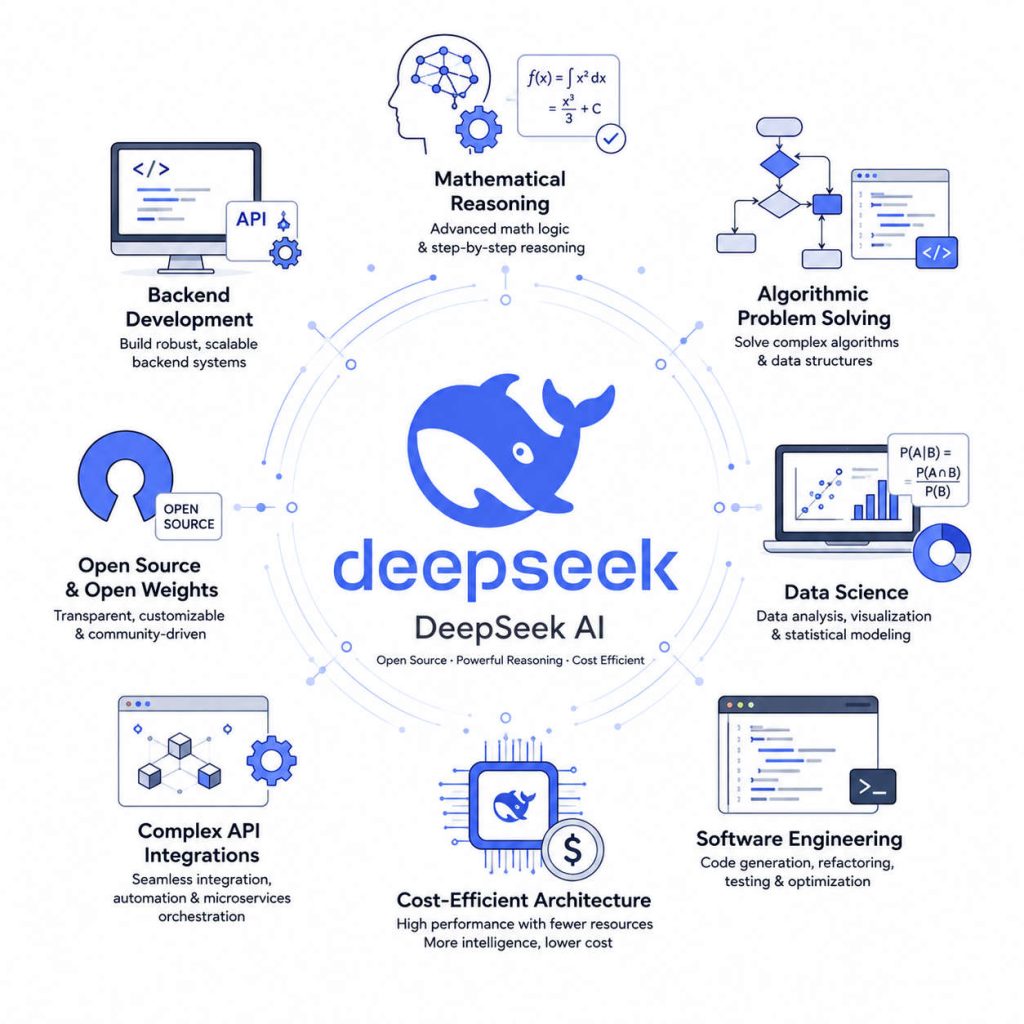
A formidable open-source contender, distinguished by its advanced reasoning capabilities and mathematical logic. DeepSeek exhibits exceptional competence in intricate algorithmic problem-solving, software engineering, and data science workflows. Its cost-efficient architecture and open-weight philosophy empirically demonstrate that world-class reasoning performance is achievable outside the traditional paradigm of closed, proprietary systems. It is particularly recommended for backend development, complex API integrations, and statistical modeling. Ideal for: Backend Development · Algorithmic Problem Solving · Data Science · Mathematical Reasoning
Qwen · Alibaba Cloud
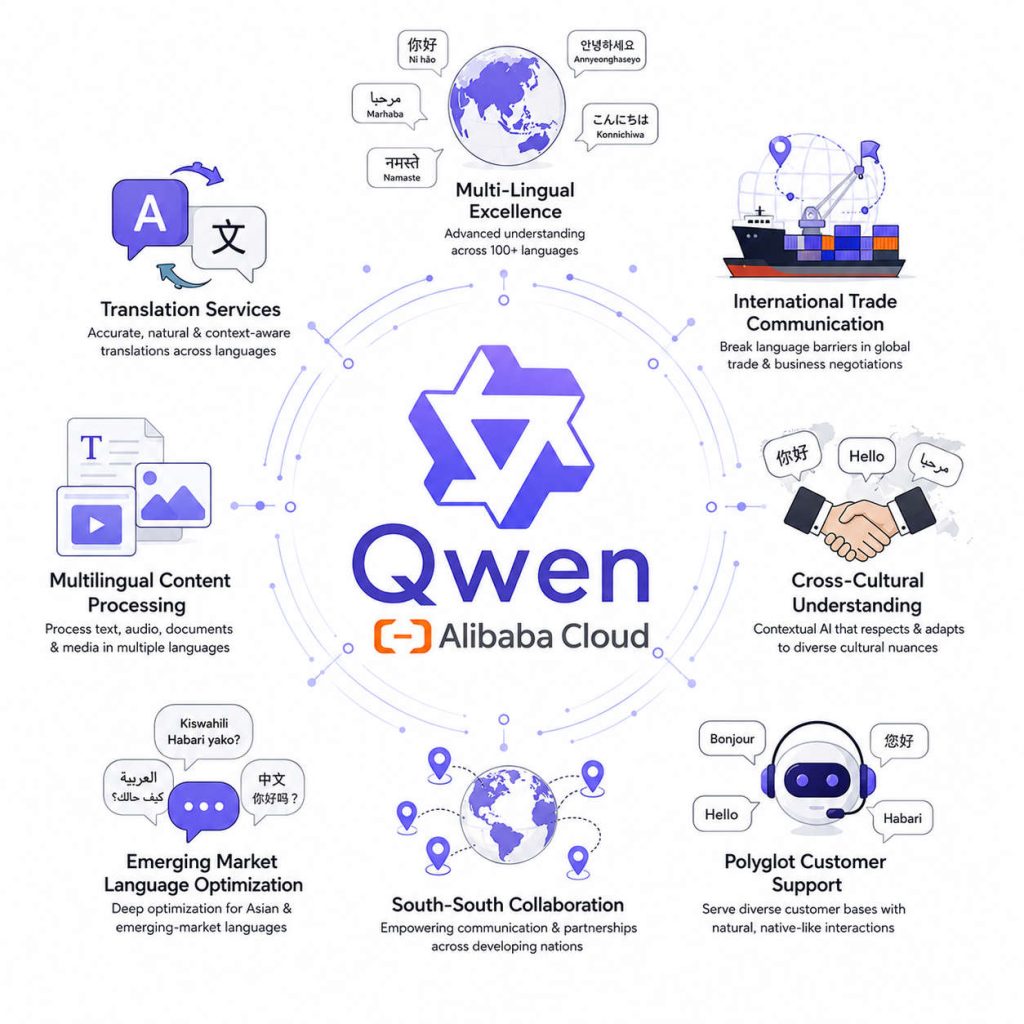
A highly sophisticated, multi-lingual model with profound optimization for Asian and emerging-market languages. It excels in cross-lingual tasks and localized cultural contextualization, making it strategically optimal for international trade communication and diverse multilingual processing. For Kenyan institutions engaged in South-South trade, diplomatic correspondence, or handling polyglot customer bases, Qwen provides a valuable linguistic bridge. Ideal for: Translation Services · International Trade Communication · Multilingual Content Processing · Cultural Localization
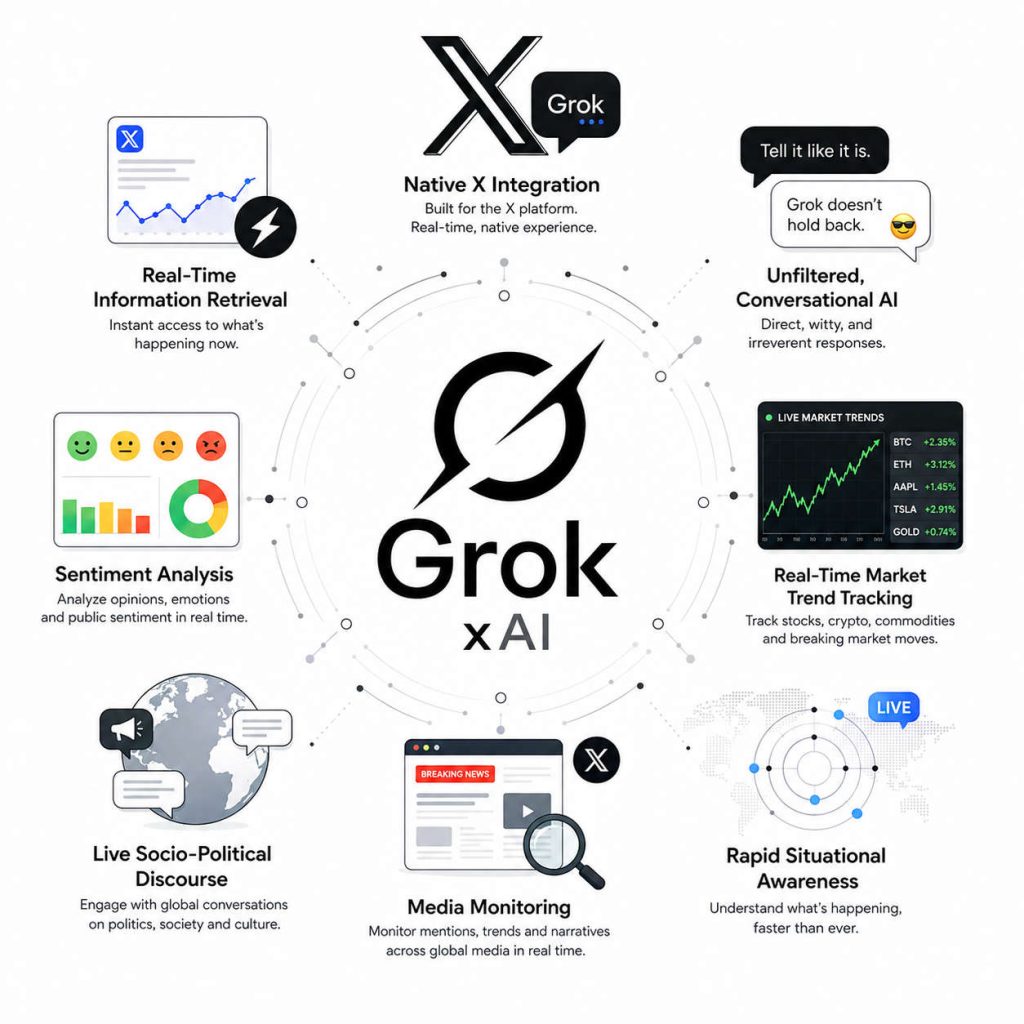
Grok · xAI
Natively integrated into the X platform (formerly Twitter), Grok is architected for real-time information retrieval and unfiltered, conversational interaction with a distinct, irreverent personality. It is ideally suited for sentiment analysis, tracking live market trends, and engaging with contemporary socio-political discourse. Its direct access to the pulse of global public conversation makes it a powerful instrument for media monitoring and rapid situational awareness. Ideal for: Sentiment Analysis · Real-Time Market Trend Tracking · Live Socio-Political Discourse · Media Monitoring
Kimi 3 · Moonshot AI
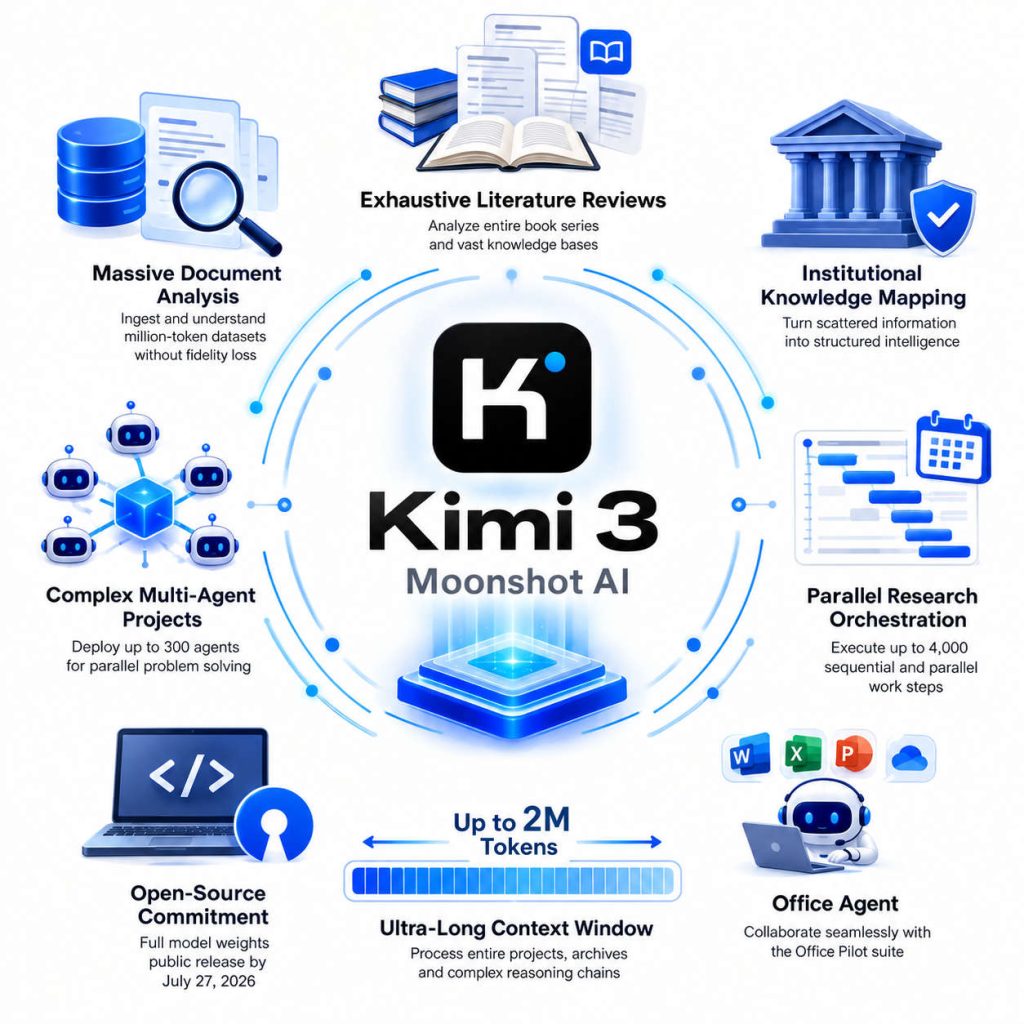
With 2.8 trillion parameters, native visual processing and a one-million-token context window, Kimi 3 (K3) is specialized for the comprehensive ingestion and analysis of massive datasets, entire book series, and vast corporate archives without fidelity loss. It sets the benchmark in coding, agentic tasks, long-term reasoning, and visual comprehension.
Advanced Capabilities – The Agent Swarm Architecture:
Kimi 3’s most groundbreaking feature is its multi-agent orchestration system, known as the Agent Swarm: instead of one model working through a task in sequence, the work is split across several agents running in parallel, with the K3 Swarm Max variant built for exactly this kind of large-scale parallel processing.
Open-Source Commitment: In a landmark move for the ecosystem, Moonshot AI released the complete model weights of Kimi K3 to the public on July 26, 2026, marking a significant stride toward open-source sovereignty.
Ideal for: Exhaustive Literature Reviews · Massive Document Analysis · Institutional Knowledge Mapping · Complex Multi-Agent Projects · Parallel Research Orchestration
Llama · Meta
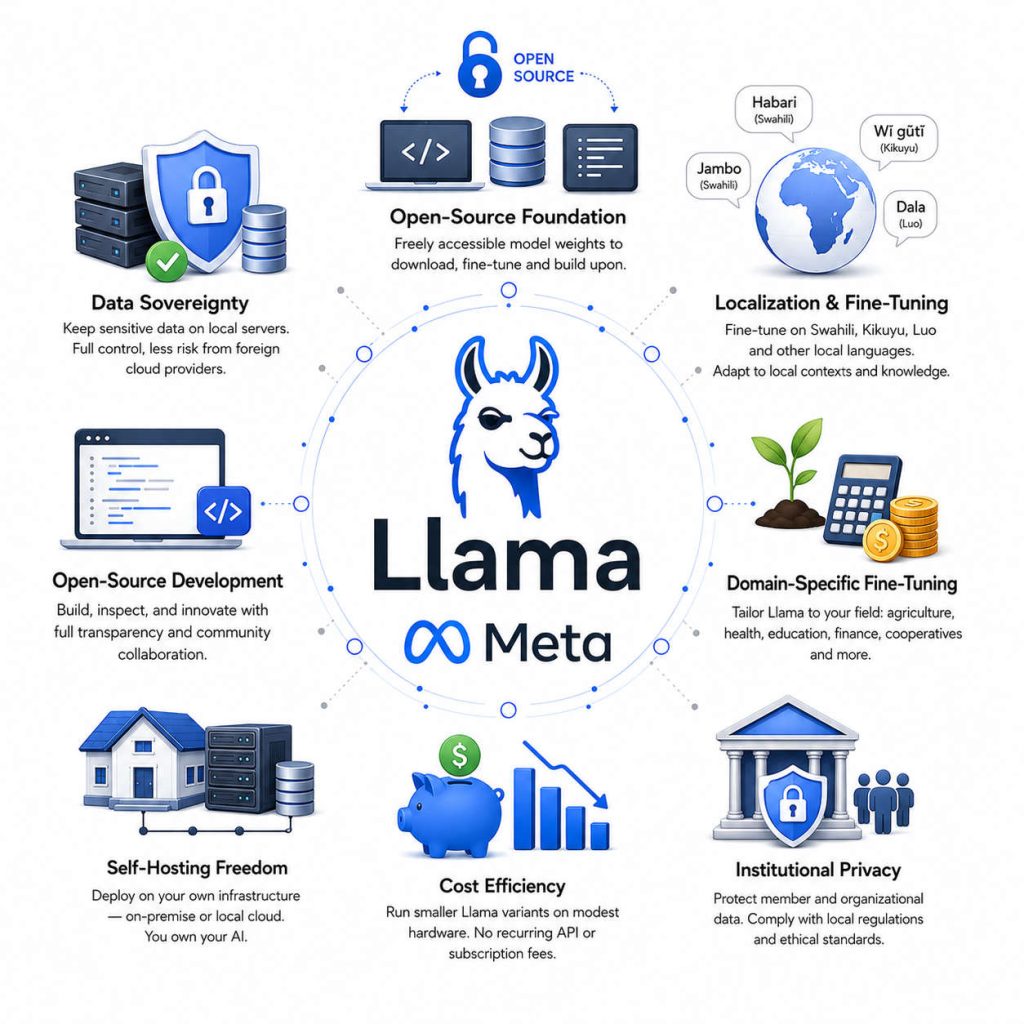
The cornerstone of the global open-source AI movement. Meta’s Llama family offers freely accessible model weights that institutions can download, fine-tune, and host on their own infrastructure. This openness is strategically decisive for African organizations for several reasons:
Data Sovereignty: Sensitive organizational or member data remains on local servers, mitigating the risks associated with foreign cloud providers.
Localization: It permits fine-tuning on Swahili, Kikuyu, Luo, and other regional languages, alongside domain-specific data (e.g., agricultural cooperatives, local financial practices).
Cost Efficiency: For cooperatives and universities with modest server budgets, smaller Llama variants provide a viable and sovereign pathway to AI adoption, completely decoupled from recurring subscription fees.
Ideal for: Open-Source Development · Self-Hosting · Domain-Specific Fine-Tuning · Data Sovereignty · Institutional Privacy
Aya · Cohere Labs
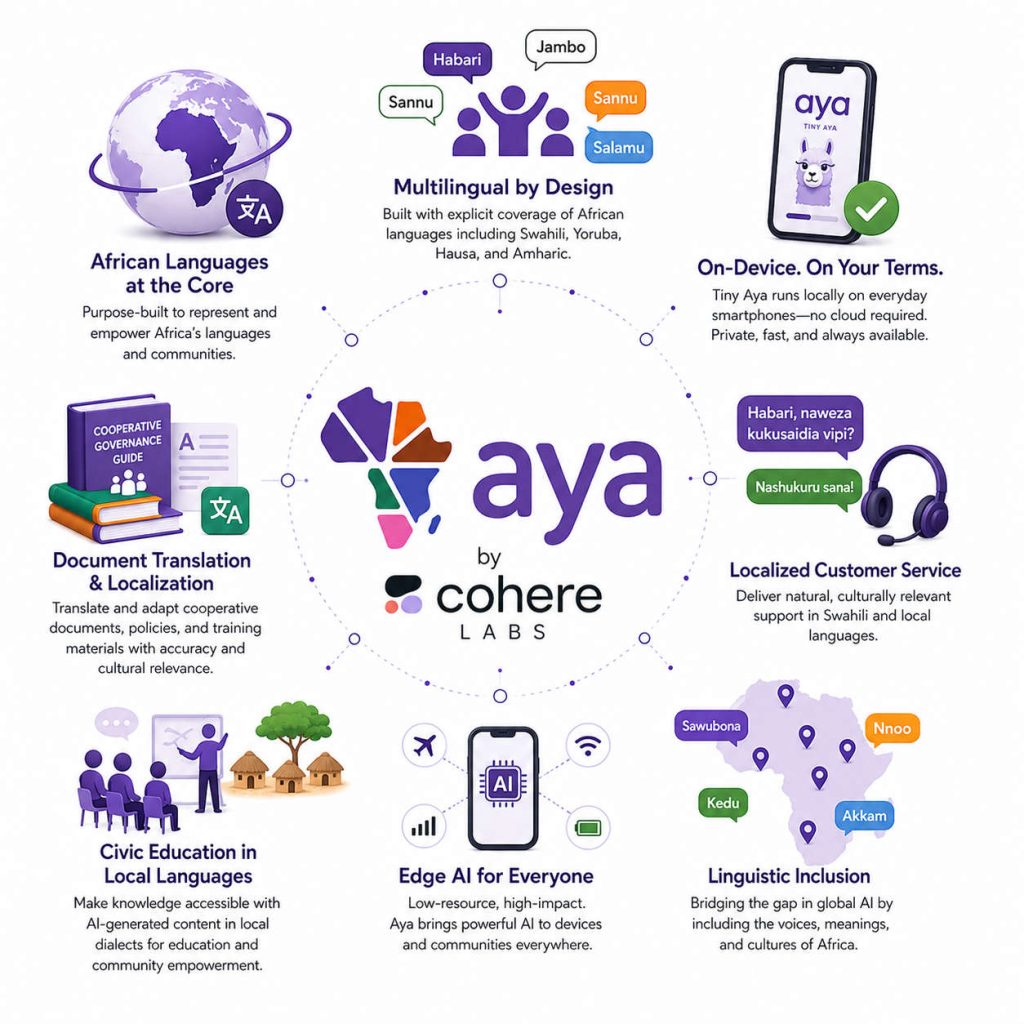
A trailblazing, multilingual generative model developed with explicit coverage of African languages, including Swahili, Yoruba, Hausa, and Amharic. The Aya family—culminating in compact variants such as Tiny Aya, which can run locally on an off-the-shelf smartphone—directly addresses the historical under-representation of African languages in global LLMs. For Kenyan applications, from Swahili-language customer support and translation of cooperative governance documents to civic education in local dialects, Aya represents the most linguistically inclusive and accessible toolset currently available. Ideal for: Swahili & African Language Coverage · On-Device Edge AI · Linguistic Inclusion · Localized Customer Service
What You Can Actually Build
Behind every model on this page sits the same underlying question: what are you actually trying to produce? Four application areas cover most of what a cooperative, small business, or individual will realistically use AI for — each explored further in the pages that follow.
Chat & Conversational Assistants
Text or voice interfaces for drafting, researching, translating and reasoning in natural language — the most accessible entry point, and where most people start.
Image Generation
Turns a written description into visual content — product photography, marketing material, illustrations — without a camera, studio or design software.
Video Generation
Produces short video clips and motion content from a text prompt, collapsing a process that once required a studio and a production crew.
Music & Audio Generation
Composes original music, generates voiceovers and produces sound design from a text description or a reference style — no studio or composer required.
Shirikiana —> to work with one another. The founding values of the cooperative movement, self-help, self-responsibility and solidarity, remain the most practical basis for collective enterprise. We join knowledge, applied action and ethical responsibility in member-owned, member-governed enterprise, guided by the International Cooperative Alliance’s principle of concern for community. We proceed incrementally, attribute every partner by name, and distinguish demonstrated capacity from stated intent.